About
About Agnes Ryu
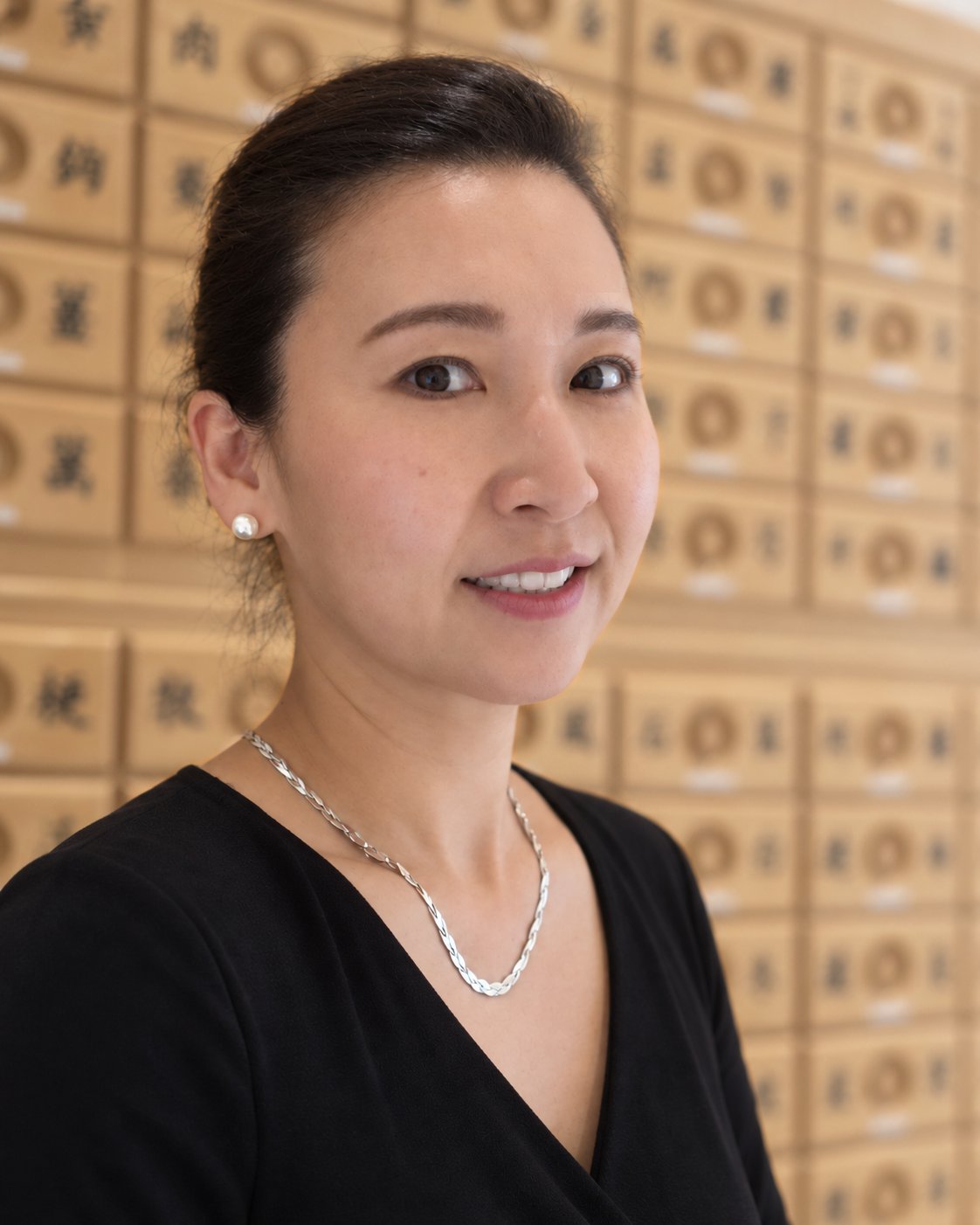
I began my career wanting mechanism, not ritual — bedside to bench, and bench back to bedside. That movement is still the shape of my medicine.
I did not set out to specialise in fertility. My practice arrived there — and when it did, everything I had trained in before turned out to have been preparation. I treat fertility not as an isolated problem but as a downstream expression of the systems beneath it: energy production, insulin regulation, thyroid function, and inflammation.
That way of working took shape across thirty years of practice, from a hospital stroke unit to a research bench and back to the consulting room. I’ve written the full account of how it happened — Bedside to bench, bench to bedside: how my practice found fertility →
How I work
I read every patient as an individual system, not a diagnosis to be matched to a protocol. A label tells me what to call a pattern; it does not explain why the pattern is there — and why is the only thing worth treating. That principle shapes everything: how I approach a first consultation, what I do and don’t test for on the diagnostics side, and how treatment is built.
Applied to reproduction, it means looking beneath the reproductive picture to the metabolic terrain producing it. That work runs across natural fertility, IVF support, fertility acupuncture, and hormone optimisation.
Credentials & registration
I took my Oriental Medicine degree in Korea, qualifying in 1995 and licensed there as an Oriental Medicine Physician. Korea licenses two kinds of physician, conventional western medicine doctors and Oriental Medicine doctors, each through its own degree and national examination. It is worth being precise about what my training is, because the English word acupuncturist does not describe it. The degree runs six years — two premedical years, then four medical — and carries anatomy, physiology, biochemistry, pathology, pharmacology, diagnostics and internal medicine alongside the classical discipline. The licence it leads to is a physician’s licence: in Korea you cannot practise acupuncture or prescribe herbal medicine without one, and the treatments sit inside the national health insurance scheme. I trained on a biomedical foundation and have never worked off one.
An MSc in Human Physiology followed. From 1996 to 1999 my laboratory work and my hospital work ran in parallel: research biochemistry in a university research institute, alongside a post in stroke urgent care and rehabilitation at a hospital where western medical doctors and Oriental Medicine Physicians work side by side. A first post on a stroke ward is an ordinary path for newly licensed Oriental Medicine Physicians in Korea; it is the part of my background that translates least well into a British expectation. On that unit I did acute care and rehabilitation, and read the laboratory panels and the imaging.
Three things from those years still govern how I practise. Glucose regulation sits upstream of vascular disease, so the metabolic picture is never a side issue. The nervous system reorganises in response to repeated, specific input — plasticity is a working clinical fact, not a figure of speech. And the traffic between centre and periphery runs in both directions. None of that is fertility medicine. All of it is why I read fertility the way I do.
- Licensed Oriental Medicine Physician (Korea, 1995) — Doctor of Oriental Medicine (OMD), Daegu Haany University: a six-year medical degree, two premedical and four medical years
- MSc in Human Physiology — Kyung Hee University (Korea, 1997)
- Research Biochemist, Natural Products Research Institute, Seoul National University (1996–2001); published in the British Journal of Pharmacology
- Stroke urgent care and rehabilitation — YDK East–West Hospital (Korea, 1996–1999)
- Member, Association of Traditional Chinese Medicine and Acupuncture UK (ATCM) — FM0200004
- Lecturer in Physiology and Diagnostics and Clinical Supervisor, Asante Academy of Chinese Medicine / Middlesex University (2001–2004)
- Postgraduate lecturer to physicians across continental Europe
- Founder and Clinical Director, Dr Ryu Natural Medicine — in private practice in South West London since 2004; over 30 years in clinical medicine, close to two decades of it focused on fertility
My full professional history is on LinkedIn.
Your first step
The initial consultation is where we work out what the right approach even is — not where a protocol is confirmed. Here’s what to expect at your first visit, and what the appointment costs.